Ads 468x60px

Showing posts with label Kawasaki. Show all posts

Friday, 27 July 2012

KAWASAKI NINJA 250R


KAWASAKI NINJA 250RKAWASAKI NINJA 250R Exhaust,Velg or Rim and Wheel Modification
KAWASAKI NINJA 250RKAWASAKI NINJA 250R blue color

KAWASAKI NINJA 250RKAWASAKI NINJA 250R Sport Modification

KAWASAKI NINJA 250R2008 KAWASAKI NINJA 250R Motogp Style Modify

KAWASAKI NINJA 250RKAWASAKI NINJA 250R 2006 modification

The Kawasaki Ninja 250R sportbike entered the American market in 1986 and quickly became Kawasaki’s best selling bike. The Kawasaki Ninja 250R was modified in 1988 and, as a testimony to its popularity remained relatively unchanged until 2008. In 2008, the Kawasaki Ninja 250R sportbike took the public by storm with an updated contemporarybody makeoverThe transformation didn’t stop there. This Kawasaki Ninja 250R sportbike also received major engine modifications, a more efficient cooling system, 17” wheels, wider rims, suspension changes, chassis improvements, and better steering geometry. With its lightweight and forgiving nature, it’s not hard to understand why the Kawasaki Ninja 250Rcontinues to be a favorite.

Tags: 2008 kawasaki ninja 250r, 2009 kawasaki ninja 250r, kawasaki ninja 250r review, used kawasaki ninja 250r, kawasaki ninja 250r top speed, kawasaki ninja 250r forum, 2006 kawasaki ninja 250r, kawasaki ninja 500r

Monday, 23 July 2012

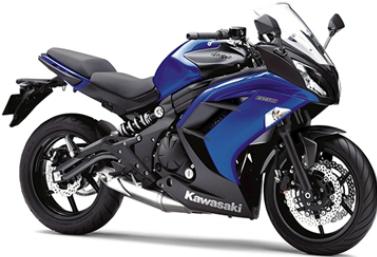
2013 Kawasaki Ninja 650R - Specs and Features


As we all know, Kawasaki Motorcycles has shown the all new 2013 Ninja 650R series and I have written about this bike here (2013 Ninja 650R colors) and here (2013 Ninja 650R ABS). Today we will meet the 2013 Ninja 650R specifications and some important features from the new Ninja 650R version. Ninja 650R is middle sportbike class which it has comes with comfortable ride and good engine performance, this bikes looks like the ER-6n series with fairing version. Kawasaki Motorcycles now offers some new things for the 2013 edition such as all new colors and ABS edition as optional, well here there are the specs.

2013 Kawasaki Ninja 650R

FEATURES : 2013 Ninja 650R powered by 649cc engine capacity, DOCH, 4 valve, Liquid-cooled, Fuel Injection system and 6 speed transmission, Ninja 650R engine delivers smooth engine performance but powerful and responsive specially for stop and go, new 2013 also has easy-full clutch and wide seat design for riding with comfortable. On the safety system, 2013 Ninja 650R also equipped with dual disk brakes on the front and single disk brake on the rear. Ninja 650R 2013 comes with Twin-pipe swingarm, it has stylish and rigid, don't forget that the Ninja 650R also equipped with windshield for better speeding and protect your body from the wind, great.

2013 Kawasaki Ninja 650R Specifications
Prices : $7,599 MSRP
Engine type : 4-stroke, liquid-cooled, DOHC, four-valve, parallel twin
Displacement : 649 cc
Bore x Stroke : 83.0 x 60.0 mm
Compression Ratio : 10.8:1
Cooling System : Liquid
Fuel System : Digital fuel injection with two 38mm Keihin throttle bodies
Ignition : TCBI with electronic advance
Transmission : 6-Speed
Final Drive : O-Ring Chain
Frame Type : Twin-pipe perimeter design, high-tensile steel
Rake/Trail : 25°/4.3 in.
Front Tire Size : Dunlop Roadsmart II 120/70x17
Rear Tire Size : Dunlop Roadsmart II 160/60x17
Wheelbase : 55.5 in.
Front Suspension / wheel travel : 41mm hydraulic telescopic fork / 4.9 in.
Rear Suspension / wheel travel : Single offset laydown shock with adjustable spring preload / 5.1 in.
Front Brakes : Dual 300mm petal discs with two-piston calipers
Rear Brakes : Single 220mm petal disc with single piston caliper
Fuel Capacity : 4.2 gal.
Seat Height : 31.7
Curb Weight : 460.8 lbs.
Overall length : 83.1 in.
Overall width : 30.3 in.
Overall height : 46.5 in.
Color Choices : Pearl Stardust White, Candy Thunder Blue, Metallic Flat Spark Black

Monday, 21 May 2012

Is Kawasaki ER-5 Good Enough as First Bike?


Kawasaki ER-5Is Kawasaki ER-5 good enough as first bike? this is one of many question that I often found when I visited Kawasaki motorcycles forums also at motorcycles forums. First, you have to know that Kawasaki motorcycles has discontinued the Kawasaki ER-5 series and it has replaced with the new one, ER-6n, so if you want to but the ER-5 as your first bike, you can get it from used motorcycles stores only. Okay back into the topic, Kawasaki ER-5 is not a full sport-bikes and it has designed for street bikes, the style and power of ER-5 is good enough for "first bike hunter", so if you asking "Is Kawasaki ER-5 good enough as first bike?" my answer is "Absolutely Yes", why? let see together.

Based from average Kawasaki ER-5 edition, this bike has 179Kg of dry weight and 800 mm of seat height, both of the value are friendly for beginner motorcycles rider, almost the same with Ninja 250r beginner motorcycles, Kawasaki ER-5 also produces a medium engine performance, it has 50.3 PS @9,000 rpm of maximum power while the Ninja 250R about 27PS-30PS of max power, it's friendly motorcycles engine performance for beginner motorcyclist.

Kawasaki ER-5 is light-weight bike, it's all because the Kawasaki ER-5 is street-bikes type and comes without full sport-fairing style, so you can ride it comfortable and easy to handle. Basically, ER-5 is not full beginner bikes but it's also not a medium bikes class, I liked to call it as entry level to medium motorcycles class, powered by 498cc of engine capacity, DOCH, 8 Valves and Parallel Twin engine, Kawasaki ER5 is more than enough as first bike for all beginner riders.

Notes : Today Kawasaki has replaced the Kawasaki ER-5 with the all new ER-6n series, ER-6n has comes with better engine performance but ER-5 edition has lighter of weight and lower seat height than ER-6n, so if you can't found the used Kawasaki ER-5 in the market, you should better jump into the new ER-5 gen, ER-6n edition, but again, if you fell that you're 100% beginner motorcycles riders, I thing Kawasaki ninja 250r is better choice for you, learn more why HERE. Good luck and hopefully you can found the Kawasaki ER-5 edition, keep safety ride and enjoy your ride.

Tuesday, 24 April 2012

2012 Kawasaki 900 Vulcan Classic Really Coming


 2012 Kawasaki 900 Vulcan Classic
 2012 Kawasaki 900 Vulcan Classic
 2012 Kawasaki 900 Vulcan Classic
 2012 Kawasaki 900 Vulcan Classic
2012 Kawasaki 900 Vulcan Classic
For those of you touring motorcycle enthusiasts, now is the time to try the performance of the 2012 Kawasaki Vulcan 1700 Classic. Start your engine, and ran on the asphalt highway. You will find a perfect sensation. Incredible. 2012 Kawasaki Vulcan 1700 Classic, provide comfort for every rider, and also provide extra comfort for passengers. This Kawasaki is powered by the engine, Four-stroke, liquid-cooled, SOHC, four valves per cylinder, 52-degree V-twin and 6-speed transmission with overdrive and positive neutral finder. This Kawasaki also supported by induction, Digital fuel injection, dual 42mm throttle bodies. You will also obtain a convenient and powerful suspense. Front suspension uses, 43 mm hydraulic telescopic fork. Rear suspension uses, swingarm with twin air-assisted shocks with 4-way rebound damping.
2012 Kawasaki Vulcan 1700 Classic leftside 2012 Kawasaki Vulcan 1700 Classic

2012 Kawasaki Vulcan 1700 Classic-leftside

This Kawasaki is supported with various great features, such as: Multi-function LCD displays on the tank-mounted instrument cluster are controlled by switches on the right handlebar. Features include a gear-position indicator, fuel gauge, clock, odometer, dual trip meters, remaining range and average fuel mileage consumption. Ignition switch allows on-position key removal, Preventing keys from scratching the instrument cluster or tank while the bike is in operation. LED taillight looks elegant and provides years of trouble-free service. And various other features.

Kawasaki Ninja 500R


 Kawasaki Ninja 500R
 Kawasaki Ninja 500R
 Kawasaki Ninja 500R
 Kawasaki Ninja 500R

Saturday, 14 April 2012

2012 Kawasaki Versys Review


2012 Kawasaki Versys Review

Preparing for battle with the V-Strom and G650GS


When Suzuki alluded to the KawasakiVersys as a competitive benchmark for the born-again V-Strom 650, we took note. Not having ridden the Versys since its 2010 makeover, we ordered one up in advance of a comparison test.
Since last reviewing the Versys, its cost has grown $300 from an MSRP of $7,600 in 2010 to $7,900 for 2012. What three more Bens buys you is a new color (a striking Pearl Solar Yellow/Ebony combo) and a bunch of inflation. The 2010 Versys' $500 price bump boasted a host of upgrades including:

* A new fairing, stacked dual headlight, new front fender and mirrors, and an LED tail light
* A larger windscreen with three-position adjustability
* Revised passenger grab rails, new seat cover material, and revised passenger seating position
* Rubber bushings at the rear engine mounts and hollow rubber-covered footpegs
* Revisions to the muffler, clutch cover, sprocket and alternator covers, radiator shrouds, swingarm pivot covers and rear fender


2012 Kawasaki Versys Lean Right
The Versys won't be pigeonholed, but it's more sportbike than off-roader.

The Versys, with its longish (5.9 in. front and 5.7 in. rear) suspension travel and tall 33.3-in. seat height, conveys a certain degree of off-road capability, but its 17-inch cast aluminum wheels and Dunlop Sportmax tires speak to its true nature. Sure, a person can modify the Versys to be more capable of off-road work, but more suitable bikes exist. Our forthcoming shootout will examine the relative merits of each manufacturer's approach to achieving a useful street/dirt balance.

2012 Kawasaki Versys Engine
In the street/dirt balance equation, the Versys leans heavily toward the street and is a strong performer in the twisties. But its under-engine exhaust and 17-inch tires aren't conducive to aggressive off-road riding.

As an urban-assault cycle, the Versys excels. Its snappy, 649cc parallel-Twin engine jettisons away from stoplights and makes short work of navigating heavy city traffic. The large passenger grab handle doubles as an effective appendage for securing items when in-transit, while the Versys' mirrors provide an unobstructed view of dangers approaching from behind.
Beyond city limits the Versys is a great weapon for attacking gnarled switchbacks and embarrassing sportbike pilots tiptoeing across chunked asphalt. Or, attach Kawasaki's available hardbags and head out for a tour of the contiguous 48. The Versys' neutral seating position provides a balanced combination of comfort and control, and its three-way adjustable windscreen deflects more or less wind depending on the situation.
The result of trying to keep a fairly low seat height is a short distance from footpegs to seat that cramps taller riders and is exacerbated by a concave section at the rear of the seat where tall riders sit. Our shorter testers weren't bothered, but tall riders are faced with increasing discomfort as the miles accumulate - those above six feet might want to look at aftermarket alternatives.

2012 Kawasaki Versys Dirt
Long-travel suspension and 17-inch wheels send a mixed message, but the Versys will handily navigate the common fire road. More aggressive off-roading will require more enduroesque tires.
2012 Kawasaki Versys Gauges
No frills here, but the gauge cluster is clean and legible. Dual tripmeters are a nice touch, as is the adjustable windscreen that shelters riders of various sizes.

Kawasaki endowed the Versys with rebound and preload damping adjustability to both the 41mm inverted front fork and lay-down rear shock. The instrument cluster, while spartan, includes a fuel gauge, clock and dual tripmeters. Adjustable clutch and front brake levers ably fit a variety of hands.

2012 Kawasaki Versys Seat
After 200 miles, tall riders will grow to heavily dislike this saddle. Roderick describes it as a thinly disguised torture device, but our shorter testers judged it as satisfactory.

At approximately 490 lbs with its 5.0-gallon tank full, the Versys is kind of hefty for a mid-displacement Twin producing 56.5 hp at 8250 rpm, but its linear powerband is a willing accomplice in most any situation short of long, open roads or a racetrack. Fuel mileage in our hands was in the low-to-mid 40-mpg margin, so the Versys has an admirable range of more than 200 miles. Its 6-speed transmission was less impressive, exhibiting a clunky response to our toes.
Consensus in our 2010 review of the Versys was "if faced with a budget for only one mid-size street bike, a lot of riders - old, young or in between - might want to take a closer look at the Versys."
What we'll soon discover is how the Versys stacks up against two equivalent, yet more dirt-worthy adversaries. At $8,300 - including ABS - the Suzuki V-Strom is marginally more expensive than the Versys, but is the 645cc, V-Twin-powered Strom a better all-around bike? Same goes for the $7,850 BMW G650GS, which also incorporates ABS but is powered by a relatively meek 652cc Single.

2012 Kawasaki Versys Front Right
Related Posts Plugin for WordPress, Blogger...

You May Like to Visit

Follow us on Facebook

Fb Comment